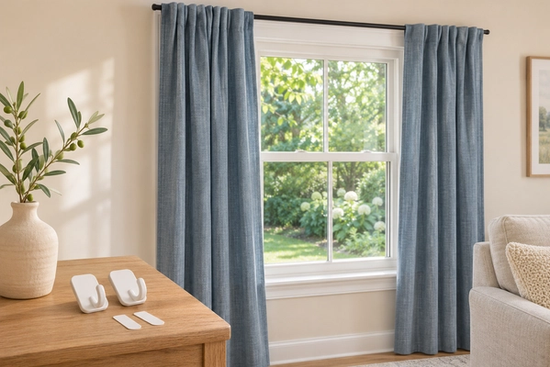
Tension Rods vs No-Drill Curtain Brackets: Which Should You Use?

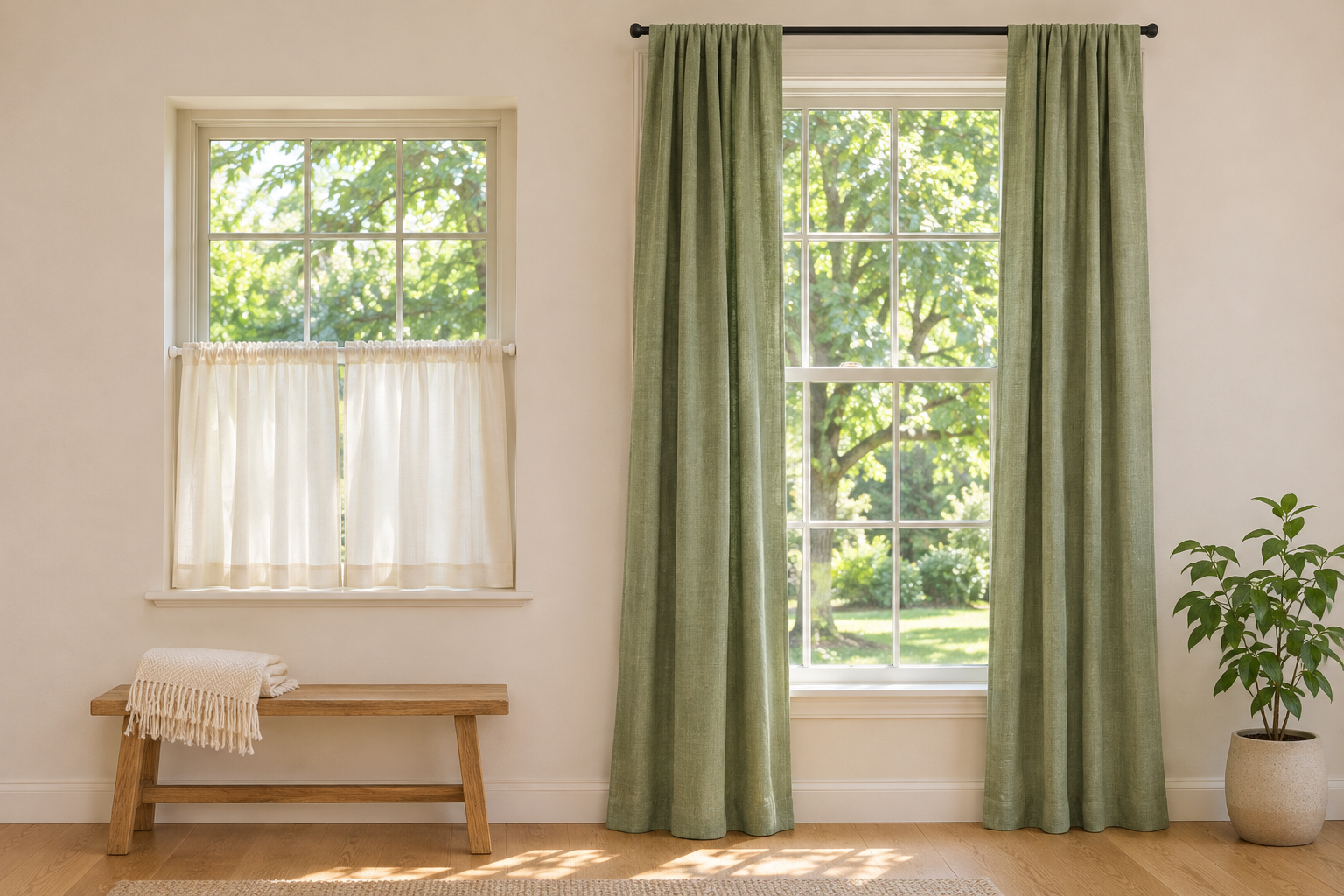
A tension rod works well for lightweight curtains inside a window recess. No-drill brackets suit heavier or layered curtains and wider windows with compatible wooden trim.
Start with where you want the curtains to hang. A café curtain tucked inside the frame needs a different setup than floor-length panels framing the window.
- Tension rods hold by pressure inside a window recess and work best with light curtains.
- Kwik-Hang brackets tap into wooden trim and hold up to 20 lbs each.
- Kwik-Hang requires traditional wooden trim between 1/2 inch and 1 inch wide.
- Tension rod weight limits vary by product and length. Check the rating before hanging curtains.
Tension Rods vs No-Drill Brackets at a Glance
| Feature | Tension Rod | Kwik-Hang No-Drill Brackets |
| Where it mounts | Inside the window recess | Top corners of wooden window trim |
| Best window type | Small, narrow recess with suitable contact surfaces | Traditional wooden trim, 1/2 inch to 1 inch wide |
| Curtain weight | Best for light panels; check the product rating | Each bracket holds up to 20 lbs |
| Layering | Separate rods need space inside the recess | Double brackets hold inner and outer rods |
| Wide windows | Longer spans may sag; check the rod’s range | Add center supports for windows wider than 60 inches |
| Measuring | Measure inside width for the correct rod size | No measuring or leveling for bracket placement |
| Tools needed | Usually none; follow product instructions | Hammer |
| Removal | Release tension and lift out | Remove rod, then lift brackets; reusable |
How Tension Rods Work
A spring-loaded tension rod presses against opposite sides of a window recess. Pressure holds the end caps in place without brackets or screws.
The rod sits inside the opening, so your curtains hang within the frame. This makes a tension rod a simple inside-mount curtain rod.
Getting the Fit Right
Measure the inside width where the rod will sit. Choose a rod whose stated size range includes that measurement.
Follow the rod’s instructions to extend it and adjust the tension. Many models twist to fit, but the exact adjustment method varies.
Where Tension Rods Shine
A tension rod for curtains makes sense when you want a light panel in a narrow opening. It’s easy to take down for cleaning or moving.
Café curtains are a natural match: they cover part of the window while leaving the rest open to light.
Small bathroom windows and temporary setups can also work well. Choose a rod suited to the room and follow its surface requirements.
For inspiration, explore café curtains and bathroom window treatments.
Where Tension Rods Fall Short
A tension curtain rod depends on its grip at both ends. Added weight, a loose fit or repeated pulling can make that grip less reliable.
Heavy or lined fabric can bow a rod that isn’t rated for the load. Longer spans can add sag, especially as the rod extends.
The spring can also slip over time and need readjustment. If the rod keeps falling, check the fit and curtain weight before tightening it again.
Placement is another limit. An inside-mounted rod keeps the curtains within the opening, so fabric stacks in front of the glass when opened.
For curtains that frame the window from outside, choose a bracket-mounted setup. Kwik-Hang positions the rod at the top of the trim.
How to Keep a Tension Rod From Falling
- Clean the contact points: Remove dust and let the surfaces dry before fitting the rod.
- Check the fit: Use the correct size range and adjust the rod until snug, following its instructions.
- Lighten the load: Choose lighter fabric if the full curtain weight exceeds the rod’s rating.
- Recheck the grip: After opening and closing the curtains, confirm both ends remain secure.
Avoid pulling down on the panels to move them. If a correctly fitted rod still slips, a different mounting method may suit your curtains better.
How No-Drill Curtain Rod Brackets Work
Kwik-Hang no-drill curtain rod brackets use built-in pins to grip the top of wooden window trim. The rod rests in the brackets.
The trim supports the hardware, so nothing relies on pressure against the sides of a recess. There’s no drilling, nails or screws.
Place. Tap. Hang.
- Place a bracket at the top corner of your wooden window trim.
- Tap it in with a hammer, then repeat on the other side.
- Thread the curtains onto the rod and set the rod in the brackets.
The corners set the bracket positions, so there’s no measuring or leveling for placement. See How to Hang Curtains for the full walkthrough.
Check your trim before ordering. It must be traditional wooden casing between 1/2 inch and 1 inch wide.
Kwik-Hang isn’t recommended for hardwoods like oak, PVC, MDF, metal trim or crown molding. An untrimmed opening needs another mounting method.
Match the Brackets to Your Curtains
Single Curtain Rod Brackets hold one rod and project 3 inches. Choose a 5/8-inch rod for sheers or lighter curtains and a 1-inch rod for heavier drapery.
Double Curtain Rod Brackets project 4 inches and hold two rods: a 5/8-inch inner rod and a 1-inch outer rod.
That setup lets you hang sheers behind drapes without fitting two tension rods into the recess. See How to Layer Curtains Like a Pro.
Each bracket holds up to 20 lbs. Weigh your panels and hardware together, and choose curtain rods that support the full setup.
For wide windows, use no center support up to 60 inches, one from 61 to 120 inches and two at 121 inches or wider.
Match the support to the setup: Center Support Bracket for Single Curtain Rods or Double Center Support Bracket for Wide Windows.
Which Should You Use?
- Small inside-mount window with light curtains: Choose a tension rod. It keeps café curtains or a lightweight panel tucked inside the recess.
- Blackout curtains or lined drapes: Choose Kwik-Hang with a 1-inch rod on compatible wooden trim. Confirm the full load fits the hardware ratings.
- Sheers behind drapes: Choose Double Curtain Rod Brackets. Separate inner and outer rods give each layer its own place.
- Window wider than 60 inches: Use Kwik-Hang brackets with the appropriate center supports on compatible wooden trim.
- Curtains framing the window: Choose no-drill brackets for an outside mount at the top of the trim. The rod can extend beyond the opening.
- No compatible wooden trim: Try a tension rod inside a suitable recess. Magnetic rods or adhesive hooks may suit other surfaces.
- Renting: Both methods avoid drilled wall holes. Tension rods suit lighter panels, while Kwik-Hang supports heavier curtains on compatible trim.
Kwik-Hang brackets are removable and reusable. After taking down the curtains and rod, gently tap the brackets out of the trim.
Their pins may leave tiny marks in the trim, while the walls remain untouched. Check the FAQ for installation and removal guidance.
Hang Curtains Your Way
Choose the mount that fits your window and the curtains you want. Light panels in a narrow recess? A tension rod can do the job.
For heavier or layered curtains on compatible wooden trim, Kwik-Hang makes decorating simple.
The Original No-Drill Curtain Rod Bracket is patented and Designed in the USA. Place. Tap. Hang.
Shop Kwik-Hang curtain rod brackets to finish your windows without drilling into your walls.
Frequently Asked Questions
What is the difference between a tension rod and a curtain rod?
A tension rod holds itself inside a window frame using pressure. A standard curtain rod rests in brackets attached to a supporting surface.
Both hold curtains, but their mounting methods differ. See How to Choose the Right Curtain Rod for Your Room.
How much weight can a tension rod hold?
A tension rod’s weight capacity depends on the model and its installed length. Check the package rating rather than relying on a general weight limit.
For heavier panels on compatible wooden trim, Kwik-Hang brackets hold up to 20 lbs each. Read How to Hang Heavy Curtains before choosing your setup.
What can I use instead of a tension rod without drilling?
Use Kwik-Hang’s tap-in no-drill curtain rod brackets on compatible wooden trim. Magnetic rods suit compatible metal surfaces, while adhesive hooks need an approved mounting surface.
Compare the options in 4 Best Ways to Hang Curtains Without Drilling.
Which is better for a rental, a tension rod or no-drill brackets?
A tension rod suits lightweight curtains inside a recess. Kwik-Hang brackets suit heavier or layered panels when the rental has compatible wooden trim.
Check your lease, since the bracket pins enter the trim. Explore window treatments for renters and No-Drill vs Adhesive Curtain Brackets for other options.
How do I keep a tension rod from falling?
Clean and dry the contact points, confirm the size range and adjust the rod until snug. Keep curtain weight within the product’s rating.
Check the grip after moving the curtains. For heavier panels on compatible trim, consider Kwik-Hang brackets. For more fixes, see how to keep your curtain rod from sliding.